

How To Set Up Your Science Fair Board
Holding a reading fair is an excellent way to better students' engagement and excitement about reading and demonstrating their learning from a text. Students participating in a reading fair create a project, referred to as a reading fair lath, to share the book they read and some of their key takeaways with others.
During my fourth dimension as a instructor, I've participated in many reading fairs. Notwithstanding, many of the reading off-white boards I've seen created by students oasis't been set up correctly.
I created this guide to share some of import considerations to keep in listen when setting upwards a reading fair board.
In improver to sharing useful information well-nigh setting up a reading fair board, I'll also give a trivial more information about reading fairs and how creating a reading fair board can benefit students.
The Purpose of a Reading Fair Board
Reading off-white boards serve a few different purposes:
- The primary goal of a reading off-white board is to build student excitement around reading and literacy. Reading fair boards provide students with the opportunity to share one of their favorite books with their parents, teachers, peers, and other community members.
- Through creating the reading fair board, students may also deepen their understanding of the text every bit they piece of work to clarify to share data about it.
- Reading fairs can too motivate students to put their best effort into creating their lath and sharing information with them as there are prizes awarded to participants and winners. Having this actress incentive may exist merely the motivation some students need to pick up a book, complete their board, and begin to appreciate and enjoy reading more.
- Some reading fair boards may also be completed for a grouping contest. In these cases, students tin can as well do good by working equally a grouping and strengthening their collaboration and teamwork skills.
To further actuate the activeness of the students, recall almost the organization of a standards-based classroom. Here we have collected for y'all the necessary checklist and tips for organizing.
Reading Fair Categories
The exact categories of a reading fair may vary from school to school or competition to contest. In full general, reading fairs are divided into four main categories: Family unit (Literacy Fiction), Private (Literacy Fiction), Individual (Informational Nonfiction), Group (Literacy Fiction).
The presentation type may vary for each category and different grade levels within the category. Hither is a little more information about each category:
1. Family unit (Literacy Fiction)
This category is reserved for younger students who may need more help with their reading fair board.

Students in grades PreK to Kindergarten are in Sectionalization A and will create a storyboard presentation, and students in grades one to 2 are in Division B and will too create a storyboard presentation.
ii. Individual (Literacy Fiction)
The private literacy fiction category is for students in grades three through 12.
This category is broken down into four different divisions:
- Students in grade 3 are in Sectionalization C and will create a storyboard presentation.
- Students in grades four to 5 are in Division D and will create a storyboard presentation.
- Students in grades 6 to 8 are in Division E and can create either a storyboard or digital media presentation.
- Students in grades ix to 12 are in Sectionalisation F and tin create either a storyboard or digital media presentation.
3. Individual (Informational Nonfiction)
The individual informational nonfiction category covers the same age ranges as the individual literacy fiction category.

It is broken downward into three different divisions:
- Students in grades 3 to 5 are in Division G and volition create a storyboard presentation.
- Students in grades 6 to viii are in Division H and tin create either a storyboard or digital media presentation.
- Students in grades 9 to 12 are in Division I and tin create either a storyboard of digital media presentation.
4. Group (Literacy Fiction)
The last category option is to piece of work as a group. Students tin can work in a grouping of two or three to complete their projection.
The grade of the oldest child in the group will determine which division the group will be placed in:
- Students in grades three to 5 are in Division J and will create a storyboard presentation.
- Students in grades half dozen to eight are in Partition K and can create either a storyboard or digital media presentation.
- Students in grades 9 to 12 are in Division L and tin create either a storyboard or digital media presentation.
Reading Fair Project Guidelines
Before expecting students to brand a reading fair board, it is important to set out clear guidelines for what yous look to see included on the display. Merely equally you lot wouldn't assign other tasks to your students without conspicuously explaining what you are looking for, you don't want to simply tell them to create a board without further guidance.
Utilize the tips beneath to develop your own reading off-white project guidelines to share with your students.
Fiction Guide
When creating a fiction reading fair board, tell students that they should begin by the post-obit things.
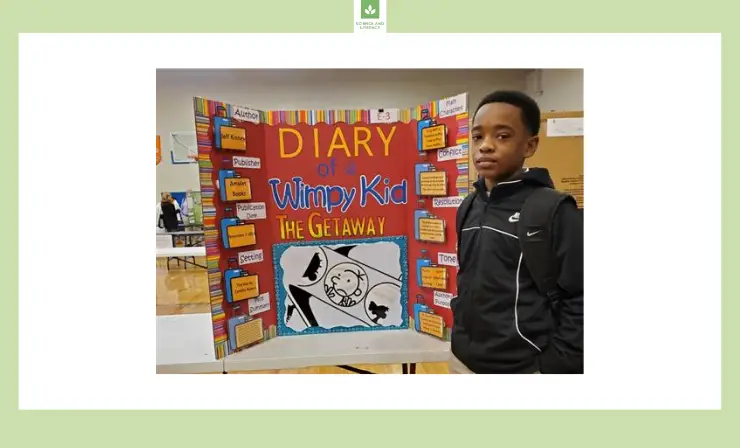
Start by listing the bibliographical information for the book.
They should also include data about all of the story elements in the book. This includes sharing a summary of the plot, descriptions for each of the main characters, the setting (fourth dimension and place) of the story, and the main disharmonize and its resolution from the story.
If you lot teach older students, you may also ask them to consummate an author's study of the text to compare the characters, theme, or plot of the book with another text.
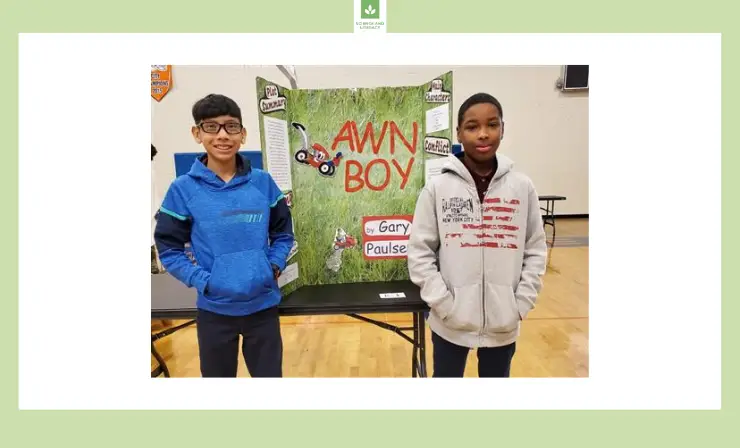
After outlining all the information you want included on the board, be certain to also offering guidance on creating the storyboard presentation. Remind students to create an organized and visually attractive board that is like shooting fish in a barrel to follow. Explicate that their text should be large enough to easily read and that the section headings for each part of the board should exist larger and standout.
If students wish to add together any visuals or props to their boards, remind students that they must fit within the infinite of the display lath, which should exist a 36-inch by 48-inch standard tri-fold board.
Nonficion Guide
Since nonfiction books have a different construction and purpose than fiction books, the guidelines for what to include on a nonfiction reading fair board will exist different.
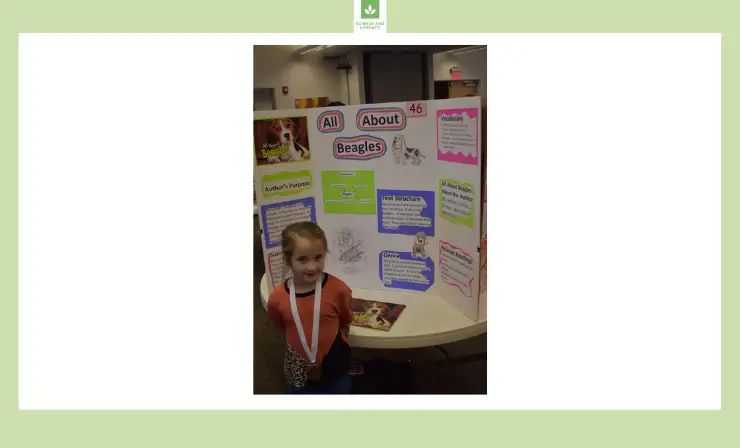
Students should brainstorm past writing the bibliographical information for the text including the author's name, the book championship, the publisher, and publication date.
They should also signal the blazon of informational text they read (explanatory, discussion, study, stance, or instructional).
One of the principal parts of a nonfiction reading fair lath is a summary of the text. The summary should include the main idea and important takeaways related to that main idea.
Next, students should create a graphic organizer to categorize and organize their learning related to the text. Students tin choose an appropriate type of graphic organizer based on the content of the text, but some possible options include cause and event diagrams, chronological sequencing, comparison and contrasting, and data webs.
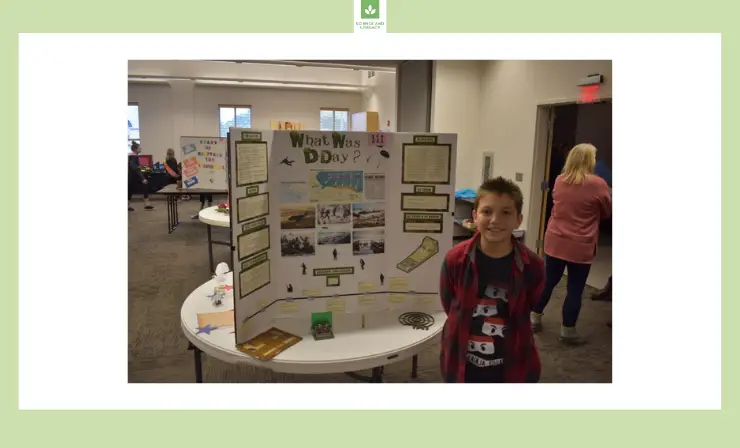
The next component of a nonfiction reading fair board is for students to make and describe a connection to the text. They may make a connectedness to themselves and how the text is relevant to their life or to another text they have read.
Students should also identify the writer's purpose for writing the book, such as to data, persuade, or entertain. You lot may also ask older students to share a dissimilar nonfiction text that offers either like or opposing data to what was shared in their volume.
The guidelines for setting up the reading off-white board are the aforementioned as what was shared for the fiction section. Remind students to keep in mind that people will be viewing their boards as they walk past, so they want to have clear headings with an organized display.
How to Class a Reading Fair Board
Earlier grading a reading off-white board, you lot should develop a clear rubric. The rubric should friction match the information y'all listed that should be included on the reading off-white. Additionally, you should as well class students based on the overall appearance of their board and how legible it is.
When you create your rubric, you can utilize a four-signal scale for each category.
Students that take included all of the necessary criteria for each section should exist awarded all 4 points. iii points would indicate that they included most of the criteria. two points would indicate that a fair amount of information was missing, and 1 point would indicate that a great deal of the required information was not present.
Consider the following criteria when creating your grading rubric for a reading fair board:
- Plot Summary: This department should include information about the characters setting, confliction, rising action, climax, falling action, and resolution.
- Volume Elements: This department includes the bibliographical data (championship, writer, publisher, and publication date), the writer's purpose, and the theme of the text.
- Legibility: For this section, you lot are assessing how like shooting fish in a barrel to read the text or handwriting is. Spelling should also be considered when assessing the legibility of the presentation.
- Appearance and Presentation: This final section covers the overall expect of the educatee's reading display board. Did they create an organized and visually appealing presentation? Did they draw or print out pictures or other visuals to back-trail the written information on the board?
If you are hesitating between grading your winners online or off-line, in this article nosotros've nerveless some tips for you.
Useful Resource
- Reading fair step-by-step guide for parents and students
- 5 reasons reading is and so important for pupil success
- reading off-white directions and rubric worksheet
Closing Thoughts
A reading fair is a nifty fashion to become students excited about reading and help them learn to securely analyze a volume and share their learnings from the volume. Helping students create a strong reading fair board that captures their learning is important.
Hopefully the guidelines I shared higher up will help y'all clearly explicate the process to students and layout exactly what they should include on their reading fair board!
Source: https://scienceandliteracy.org/how-to-set-up-a-reading-fair-board/
0 Response to "How To Set Up Your Science Fair Board"
Post a Comment